In this article
- 1. Bicep Curls (3 x 12)
- 2. Tricep Kickbacks (3 x 12)
- 3. Overhead Tricep Extension (3 x 12)
- 4. Shoulder Press (3 x 12)
- 5. Lateral Raises (3 x 12)
- 6. Front Raises (3 x 12)
- 7. Upright Rows (3 x 12)
- 8. Knee Push-ups (3 x 10)
- 9. Plank Shoulder Taps (3 x 30 sec)
- 10. Hammer Curls (3 x 12)
- 11. Bent-Over Rows (3 x 12)
- 12. Wall Push-ups (3 x 15)
- How to do the plan
- Safety first
- FAQ
This is a straightforward arm workout women can do at home with just a pair of dumbbells. It is designed to be a simple routine you can fit into your week. If you are pregnant, injured, or new to exercise, you should check with a doctor before you start. The plan you can keep on a Wednesday beats the perfect plan you drop on Thursday. This is about building a routine that works for you.
This workout is not about getting a certain look. It is about moving your body and feeling capable. You do not need any special equipment besides a mat and some light dumbbells. The goal is a simple, repeatable workout for your arms and upper body that you can do whenever you have a little time. Consistency is more important than intensity, so just do your best.
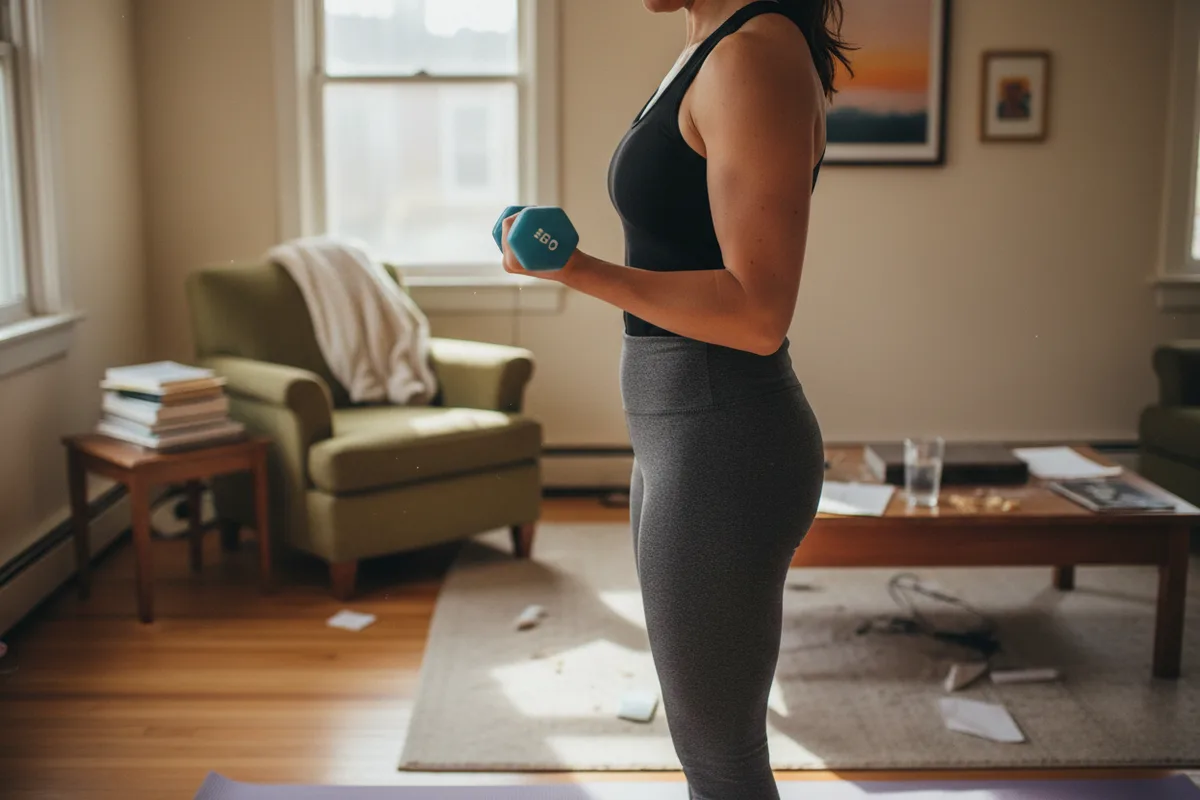
1. Bicep Curls (3 x 12)
Stand or sit holding a dumbbell in each hand, palms facing forward. Keep your elbows close to your sides. Curl the weights up toward your shoulders, squeezing your biceps. Slowly lower the weights back to the start. For an easier version, do one arm at a time. This helps you focus on your form. Keep your upper body still. Avoid using your back to swing the weights up. The movement should come from your arms only.
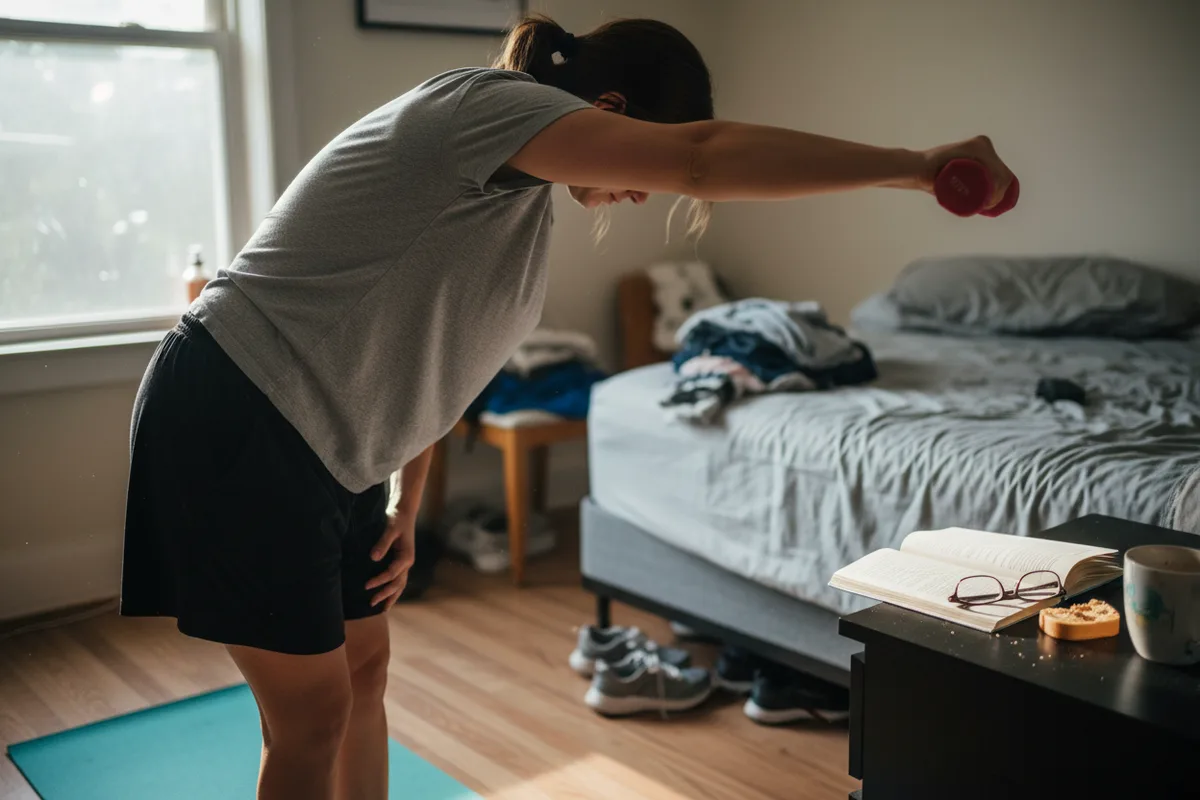
2. Tricep Kickbacks (3 x 12)
Hold a dumbbell in each hand. Hinge forward at your hips, keeping your back straight, until your torso is almost parallel to the floor. Bend your elbows to a 90 degree angle. Extend your arms straight back, squeezing your triceps. Return your arms to the starting 90 degree angle. For an easier version, use lighter weights or no weights. Your upper arms should stay still and close to your body throughout the whole exercise.
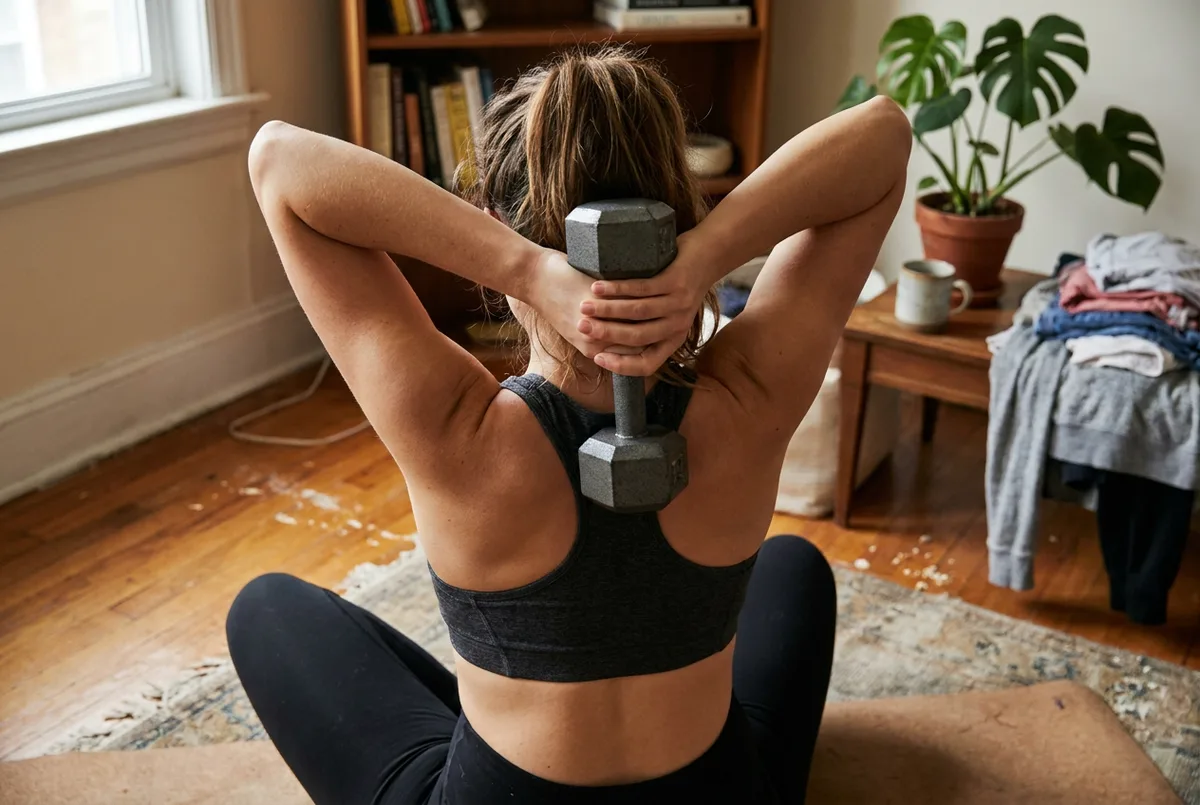
3. Overhead Tricep Extension (3 x 12)
Sit or stand tall, holding one dumbbell with both hands. Lift the dumbbell directly over your head. Your arms should be straight. Slowly lower the dumbbell behind your head by bending your elbows. Keep your upper arms still and pointed toward the ceiling. Raise the weight back to the starting position. For an easier version, use a very light weight to get the movement right. Try to keep your elbows from flaring out to the sides.
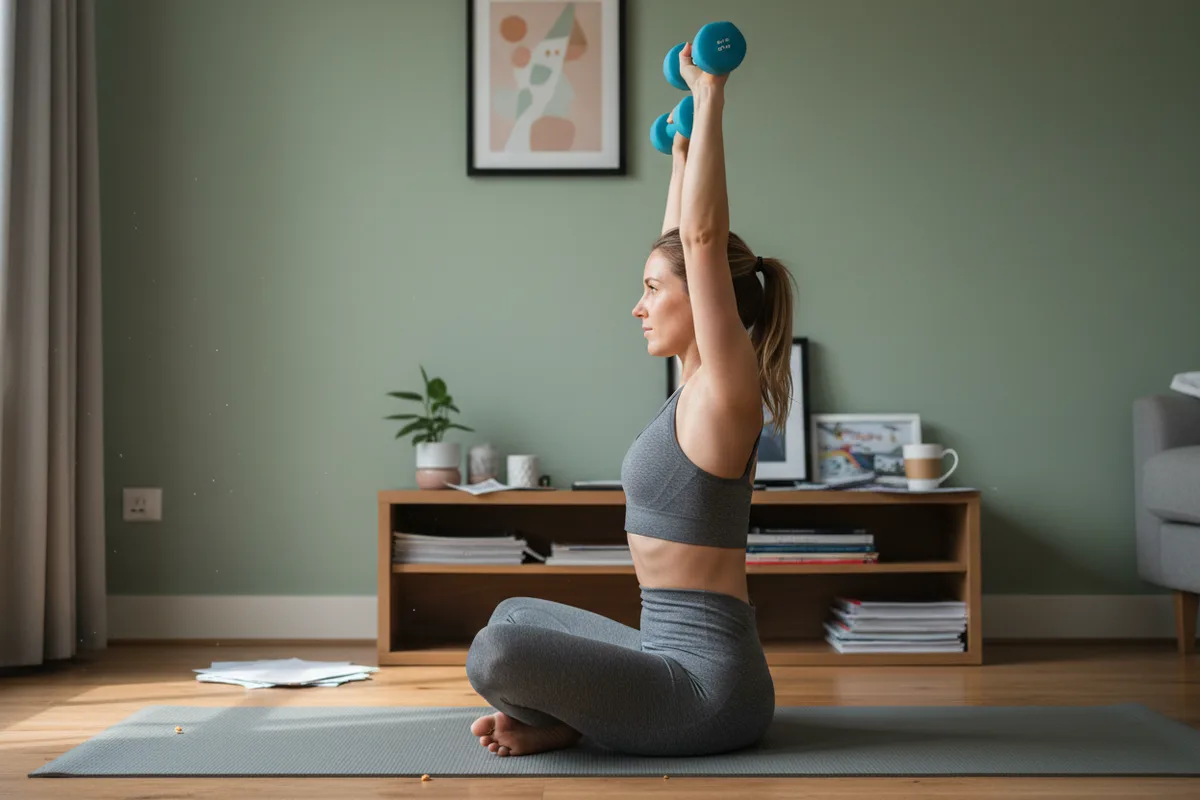
4. Shoulder Press (3 x 12)
Sit or stand with a dumbbell in each hand. Raise the dumbbells to shoulder height, with your palms facing forward and your elbows bent at 90 degrees. This is your starting position. Press the dumbbells straight up over your head until your arms are fully extended. Slowly lower them back to shoulder height. For an easier version, perform the exercise while seated on a chair with back support. Keep your core engaged and avoid arching your lower back.
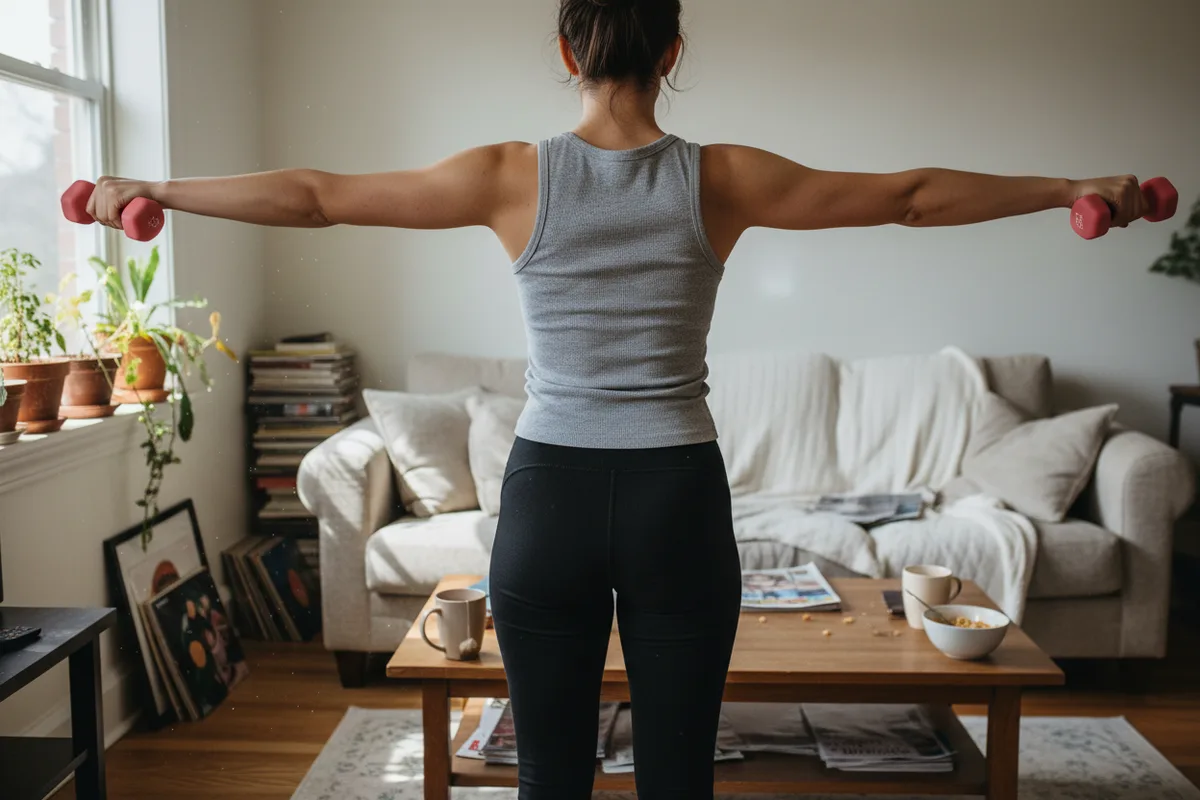
5. Lateral Raises (3 x 12)
Stand with your feet shoulder width apart, holding a light dumbbell in each hand at your sides. Your palms should be facing in. Keeping a very slight bend in your elbows, raise your arms out to your sides until they are at shoulder level. Your body should form a 'T' shape. Slowly lower the weights back down. For an easier version, use no weights and focus on slow, controlled movements. Avoid shrugging your shoulders up toward your ears.
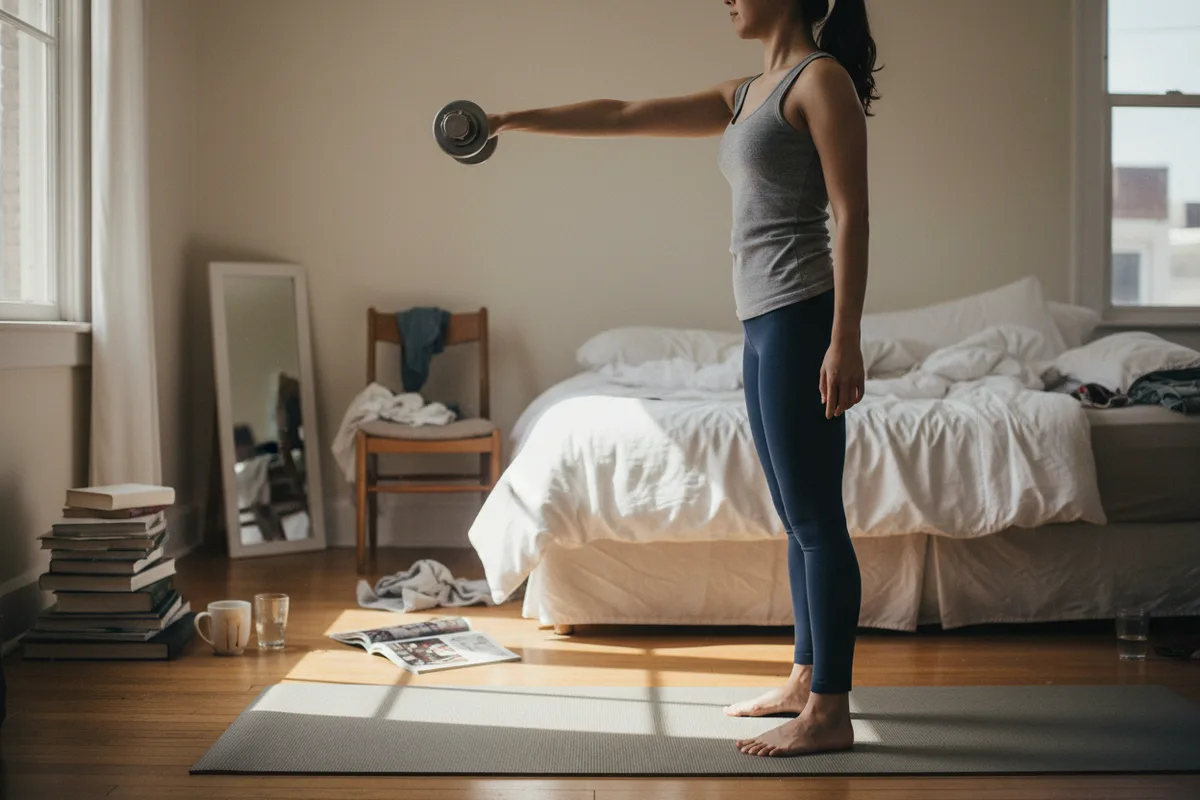
6. Front Raises (3 x 12)
Stand holding a dumbbell in each hand in front of your thighs. Your palms should face your body. Keeping your arms straight, lift the weights up in front of you until they are at shoulder level. Pause for a moment. Then, slowly lower the dumbbells back to the starting position. For an easier version, lift one arm at a time. This helps you maintain stability. Do not swing your body to lift the weights. The work should come from your shoulders.
7. Upright Rows (3 x 12)
Stand with your feet shoulder width apart, holding a dumbbell in each hand in front of you. Your palms should face your body. Lead with your elbows to pull the dumbbells straight up toward your chin. Keep the weights close to your body. Stop when the dumbbells reach your chest and your elbows are higher than your hands. Slowly lower the weights back down. For an easier version, use a single, lighter dumbbell held with both hands. Keep your back straight.
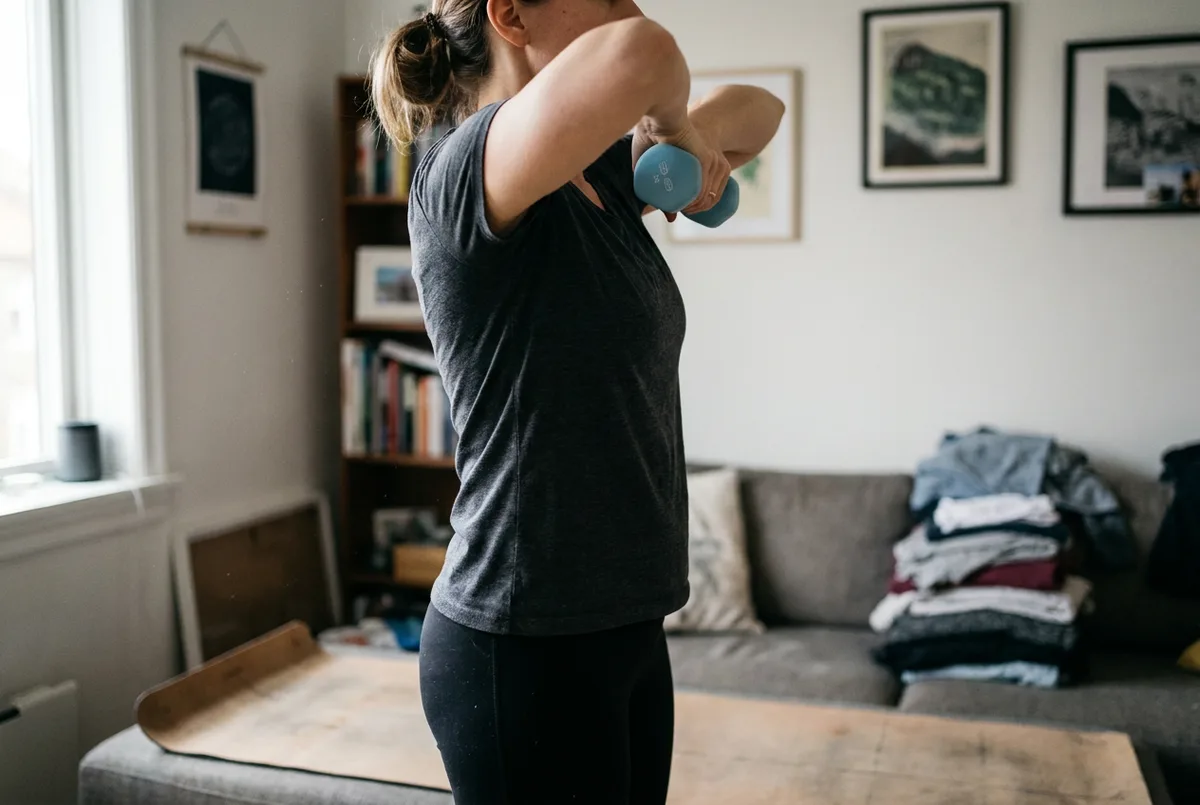
8. Knee Push-ups (3 x 10)
Start on all fours on a mat. Walk your hands forward until your body forms a straight line from your head to your knees. Your hands should be slightly wider than your shoulders. Lower your chest toward the floor by bending your elbows. Push back up to the starting position. For an easier version, do wall push-ups by standing in front of a wall and pushing away from it. Keep your core tight and your back flat throughout the movement.
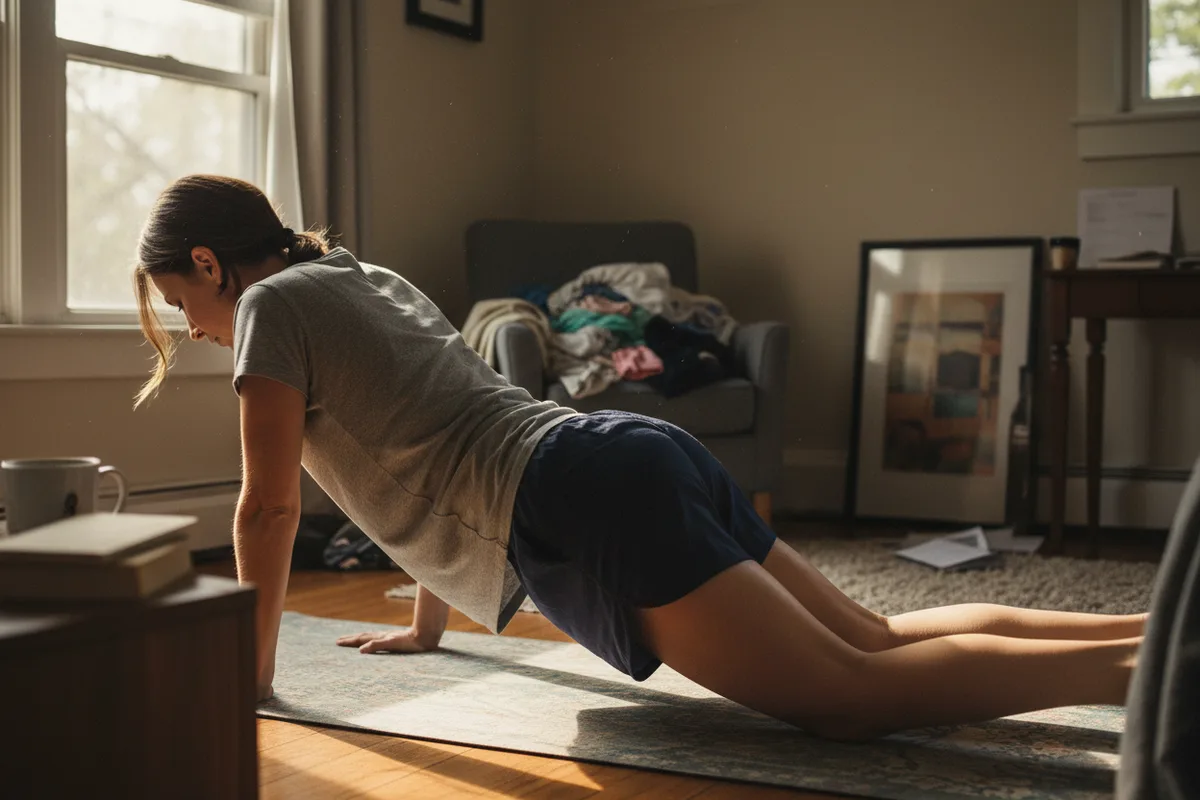
9. Plank Shoulder Taps (3 x 30 sec)
Get into a high plank position, with your hands directly under your shoulders and your body in a straight line. Your feet should be shoulder width apart. Without moving your hips, lift your right hand and tap your left shoulder. Place your right hand back down. Then lift your left hand and tap your right shoulder. For an easier version, widen your feet for more stability. Try to keep your body as still as possible. Avoid rocking from side to side.
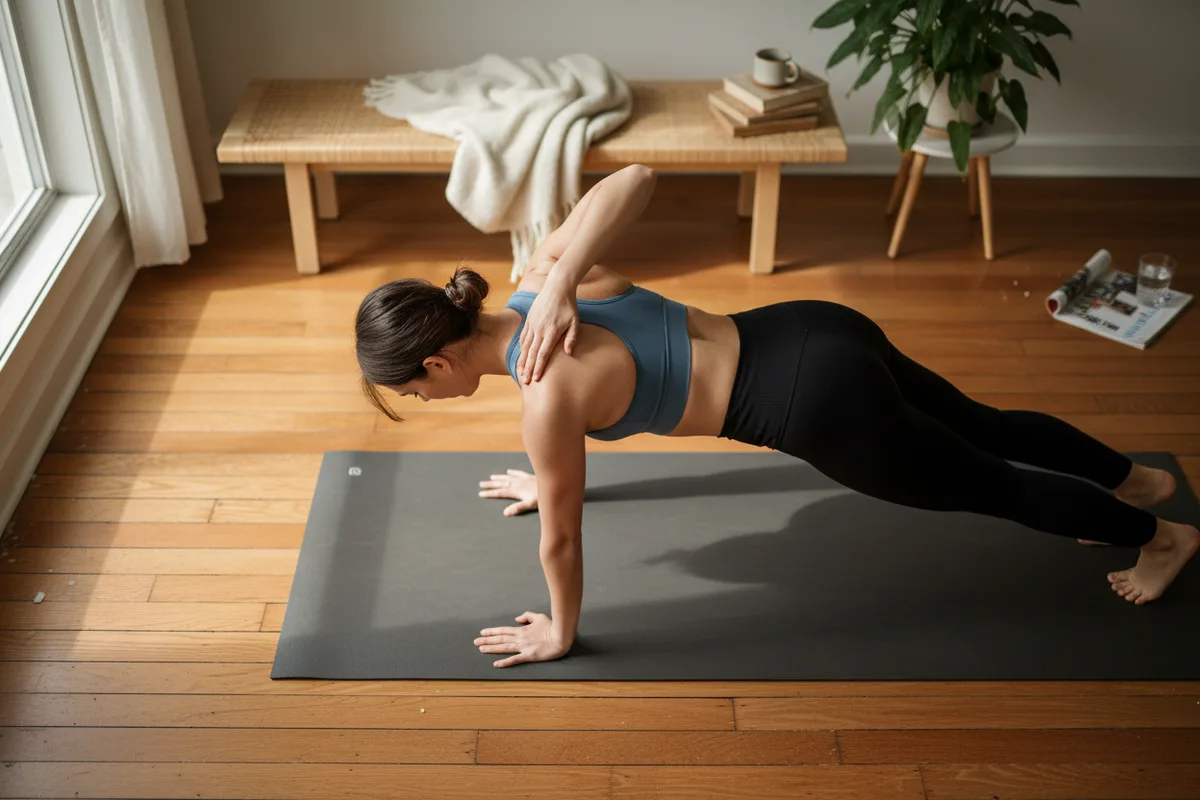
10. Hammer Curls (3 x 12)
Stand or sit holding a dumbbell in each hand with your palms facing each other. This is a neutral grip, like you are holding a hammer. Keep your elbows close to your sides. Curl the weights up toward your shoulders, maintaining the neutral grip. Squeeze your biceps at the top. Slowly lower the weights back to the start. For an easier version, alternate arms instead of lifting both at once. Do not swing the weights. Keep the movement controlled.
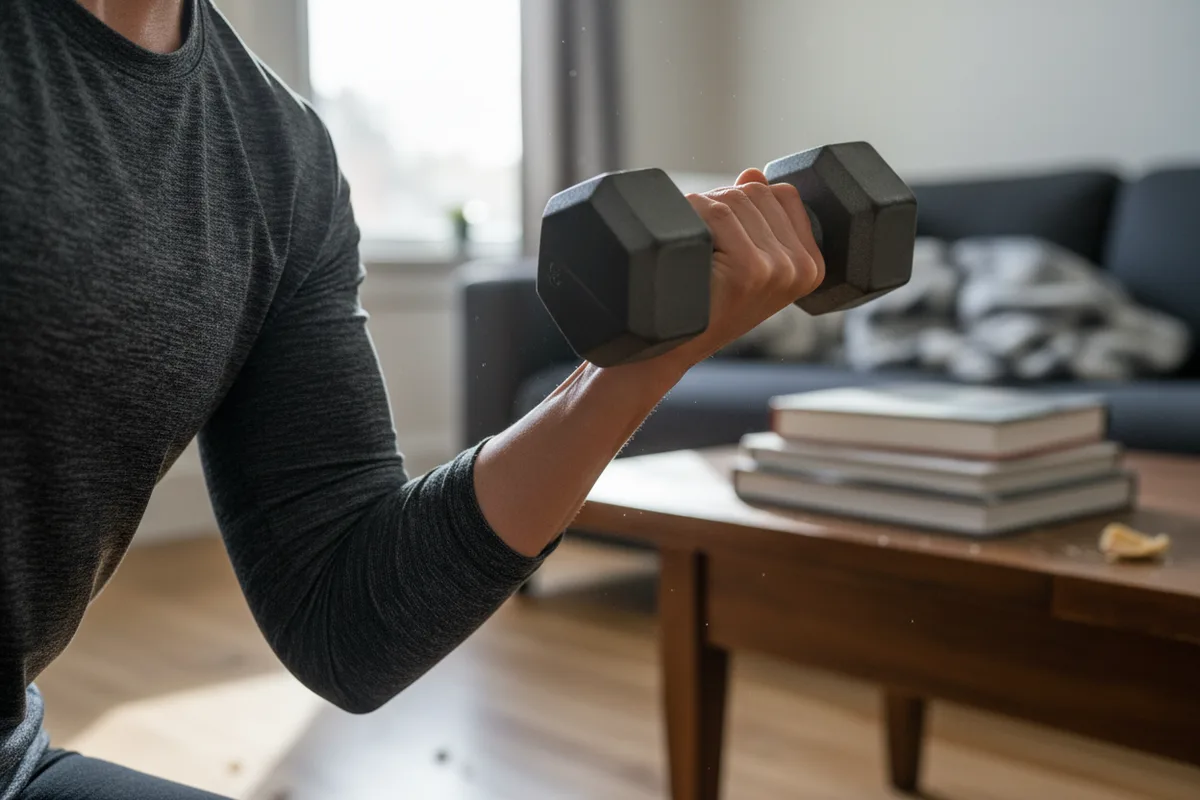
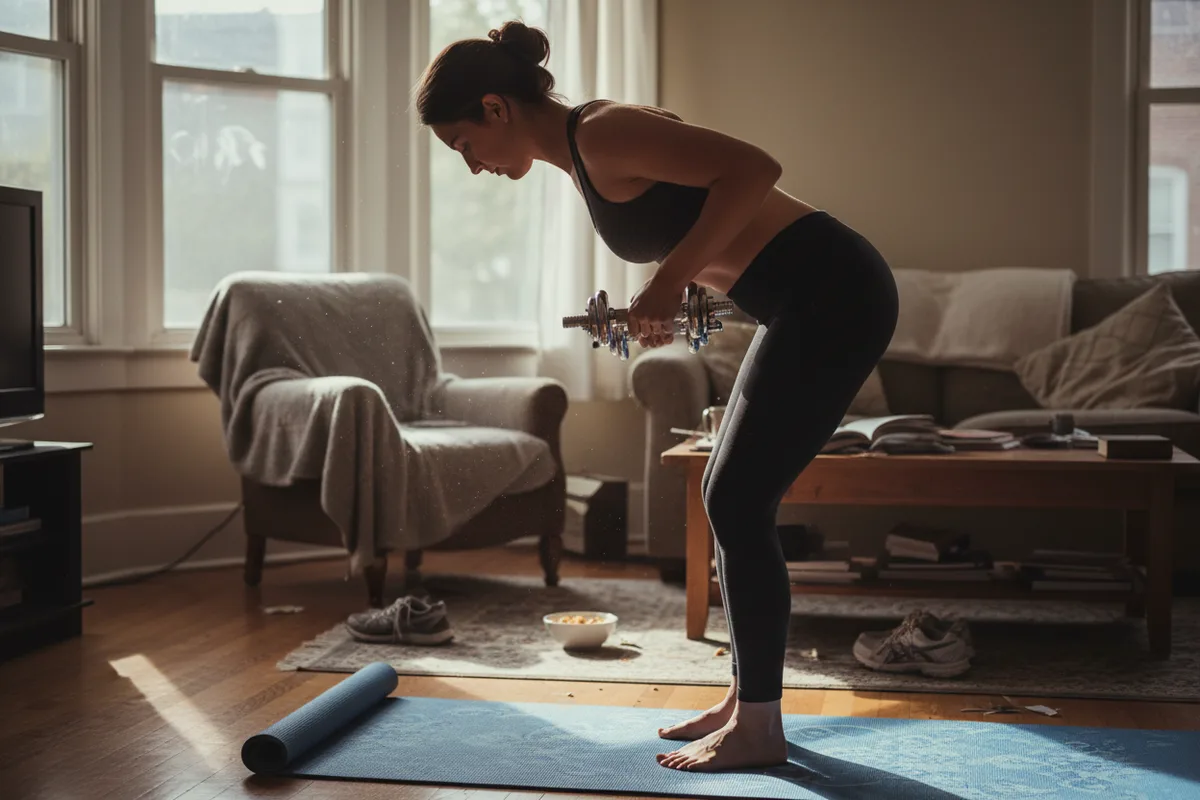
11. Bent-Over Rows (3 x 12)
Stand with your feet shoulder width apart, holding a dumbbell in each hand. Hinge forward at your hips, keeping your back straight and your knees slightly bent. Let the dumbbells hang straight down with your palms facing each other. Pull the dumbbells up toward your chest, squeezing your shoulder blades together. Keep your elbows close to your body. Slowly lower the weights back down. For an easier version, use lighter weights. Focus on pulling with your back muscles, not your arms.
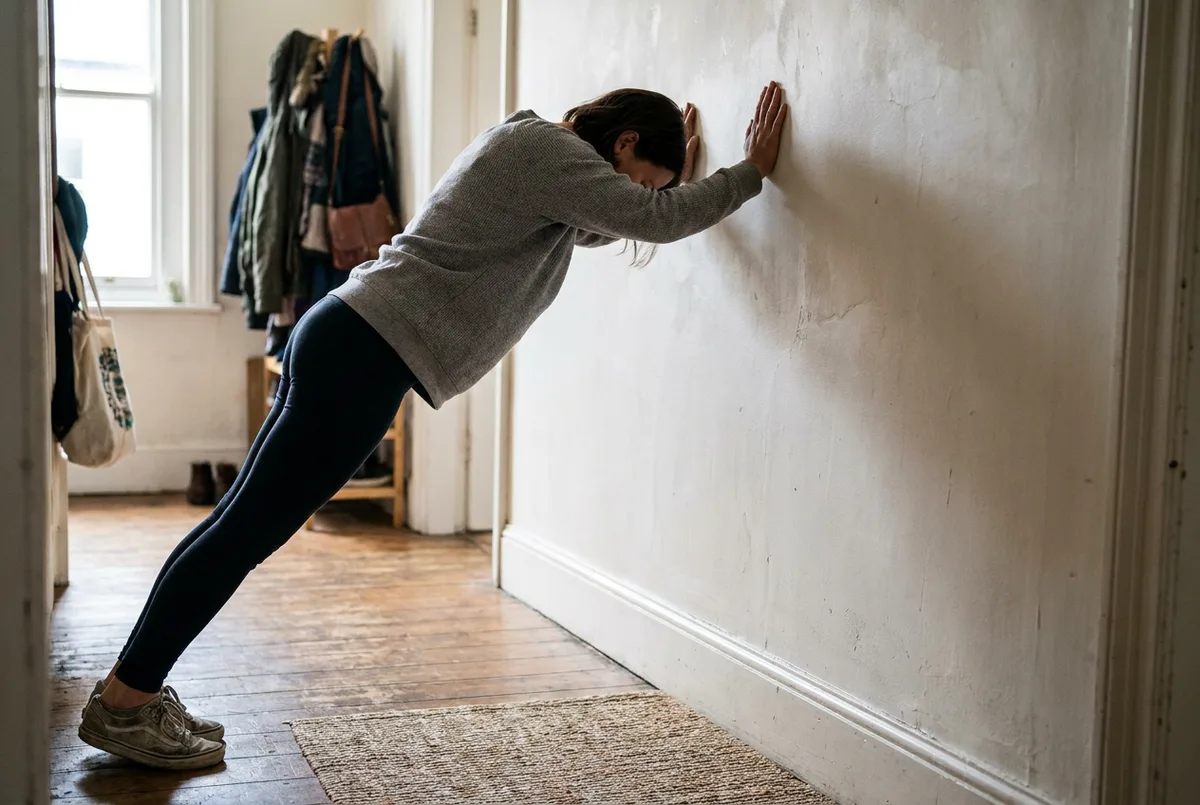
12. Wall Push-ups (3 x 15)
Stand facing a wall, about two feet away. Place your hands on the wall, slightly wider than your shoulders and at shoulder height. Lean forward by bending your elbows, bringing your chest closer to the wall. Keep your body in a straight line from head to heels. Push back to the starting position until your arms are straight but not locked. For an easier version, stand closer to the wall. The further you stand from the wall, the harder the exercise becomes.
How to do the plan
To follow this plan, complete all three sets for one exercise before moving to the next. For example, do 12 bicep curls, rest for 30 seconds, do another 12, rest, and then do the final 12. After you finish all three sets of one exercise, rest for about 60 seconds before you begin the next exercise on the list. Move at your own pace.
Safety first
- Warm up for five minutes before you begin with light movement like marching in place.
- Use light weights that you can lift for all reps with good form.
- Keep your movements slow and deliberate. Avoid using momentum.
- Stop if you feel any sharp or sudden pain.
- Breathe throughout the exercises. Do not hold your breath.
- Remember to cool down and stretch your arms and shoulders after the workout.
FAQ
What kind of weights should I use?
Start with light dumbbells, between 3 and 8 pounds. You should be able to finish every set without struggling to keep good form. You can always use heavier weights later.
How many times a week can I do this workout?
Two or three times a week is a good starting point. Be sure to take at least one day of rest in between to allow your muscles to recover.
Can I do this workout without any dumbbells?
Yes. You can use household items like water bottles or cans of soup. For some exercises, you can also just use your own body weight and focus on slowly tensing the muscle.